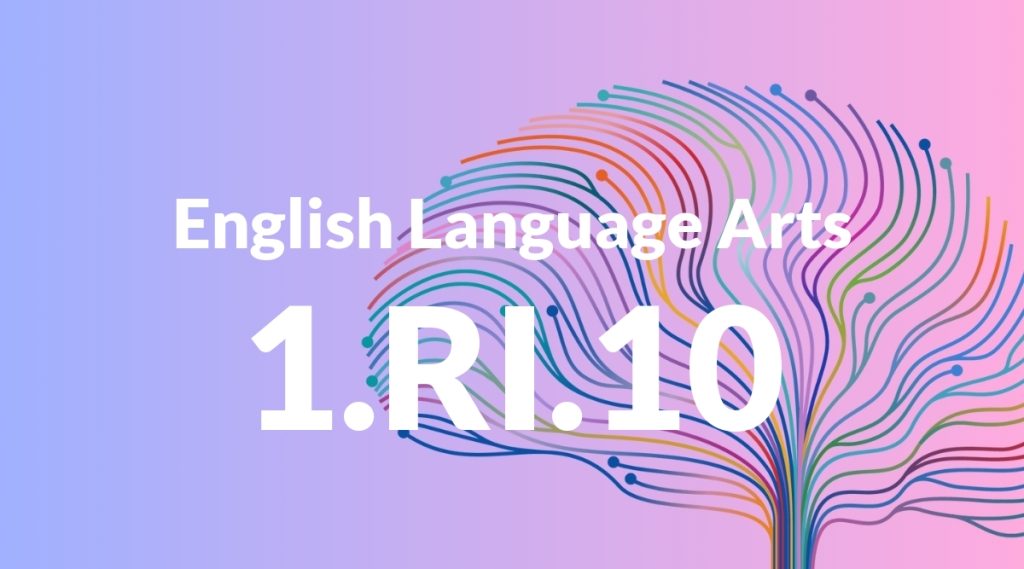
Standard: 1.RI.1 – Ask and answer questions about key details in a text.
Grade level: Grade 1
Subject: English Language Arts
Domain: Reading: Informational Text
Teacher Overview
This standard focuses on developing students’ abilities to ask and answer questions about key details in a text. This skill is crucial for comprehension and critical thinking, as it helps students engage with the text and understand its main ideas. Before tackling this standard, students should be familiar with basic word recognition and sentence comprehension. They should also have some experience with listening to and discussing stories or informational texts.
After mastering this standard, students will be able to identify the main topic and retell key details of a text. They will also be able to differentiate between important and less relevant information.

Common Misconception 1
A common misconception is that students only need to ask questions about the text. This is incorrect because the standard requires students to both ask and answer questions to demonstrate their understanding of key details.
Intervention 1
To remediate this misconception, have students work in pairs or small groups to practice asking and answering questions. Provide sentence stems and prompts to guide their discussions.
Common Misconception 2
Another misconception is that any detail in the text is a key detail. This is incorrect because key details are those that support the main idea or are crucial to understanding the text.
Intervention 2
Use graphic organizers to help students differentiate between key details and less important information. Encourage them to identify the main idea and find details that support it.
Prerequisite Knowledge
Students should be able to recognize basic words and understand simple sentences. They should have some experience with listening to and discussing stories or informational texts read aloud by adults.
Subsequent Knowledge
Students will develop the ability to identify the main topic and retell key details of a text. They will also learn to differentiate between important details and less relevant information.
Instructional Activities
- Read a short informational text and have students ask and answer questions about it.
- Use a graphic organizer to identify key details in a text.
- Pair students to practice asking and answering questions about a book they read together.
- Discuss a simple news article and identify the main idea and key details.
- Watch a short educational video and have students ask and answer questions about its content.